
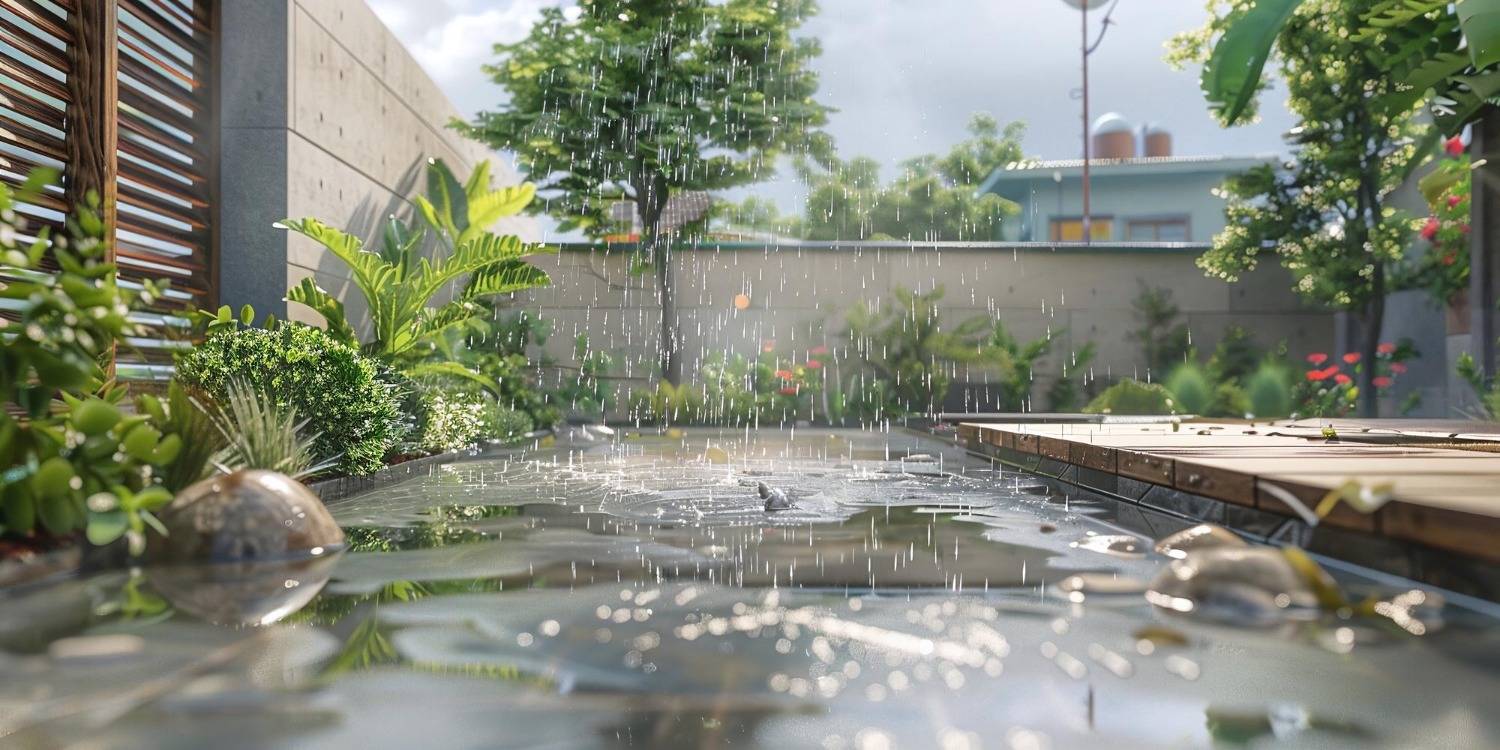
You know the scene. It rained two days ago, and there’s still a small lake in your backyard. The grass is spongy underfoot. Maybe you’ve noticed the water seems to collect in the same spots every single time, no matter how much you’ve tried to fill them in with topsoil.
If you’re dealing with pooling water in your yard, you’re not alone. It’s one of the most common property issues we see in Guelph, Kitchener, Waterloo, and Cambridge, and there’s a good reason for that. The soil conditions in this region create drainage challenges that most homeowners don’t fully understand until water starts showing up where it shouldn’t.
Here’s the thing: standing water isn’t just annoying. Left unaddressed, it can damage your foundation, kill your lawn, attract mosquitoes, and turn your outdoor space into an unusable swamp for weeks at a time. But before you start digging trenches or throwing money at the problem, you need to understand why the water is pooling in the first place.
Why Water Pools in Guelph and KW Yards
Most homeowners assume pooling water means they have a low spot in their yard. Sometimes that’s true. But in our region, the problem usually runs deeper, literally.
The Guelph-Kitchener-Waterloo area sits on the Waterloo Moraine, a geological formation spanning approximately 400 square kilometres that provides around 80% of the region’s drinking water. The moraine is made up of sand and gravel deposits, which sounds like it should drain well. And in some areas, it does. But here’s where it gets complicated.
Scattered throughout the region are pockets of clay-rich soil. Clay doesn’t drain; it holds water like a bathtub. When you have sandy soil on top of a clay layer, water percolates down until it hits that clay barrier, then spreads horizontally. This is why you might have perfect drainage in one corner of your yard and a perpetual swamp ten feet away.
Add Ontario’s freeze-thaw cycles to the mix and the problem gets worse. Every winter, the ground freezes to a depth of about 1.2 metres (roughly 4 feet). When spring arrives, the surface thaws first while the deeper soil remains frozen. Water has nowhere to go, so it sits on top. This is why April and May are prime months for yard flooding in our area, even without heavy rain.
The Grading Problem Most Homeowners Miss
Before we talk about drainage systems and French drains, let’s address the most common culprit: improper grading.
The Ontario Building Code (O. Reg. 332/12) requires that properties be graded so water flows away from buildings, not toward them. Section 9.14.6.1 specifically states that sites must be graded so water doesn’t accumulate at or near buildings. Following Toronto’s lot grading standards (which many Ontario municipalities reference), the minimum slope for side yards and drainage swales should be at least 1.5% to 2%.
What does 1.5% slope look like in practice? Roughly 1.5 centimetres of drop for every metre of distance. It doesn’t sound like much, but over a 10-metre yard, that’s 15 centimetres of difference between high and low points. When your yard is flat, or worse, sloping toward your house, water has no natural path to follow.
Here’s what I’ve found with a lot of properties in this area: the grading was probably fine when the house was built. But over time, soil settles, landscaping projects change the contours, gardens get added, and suddenly the drainage pattern that worked for twenty years doesn’t work anymore. Sometimes, just regrading the affected area solves the problem entirely, no fancy drainage system required.

Check Your Downspouts First
Before you assume you need a major drainage overhaul, take a walk around your house during the next rainstorm. Watch where the water from your roof ends up.
A typical roof can shed hundreds of litres of water during a moderate rainfall. If your downspouts are dumping all that water right next to your foundation, or into a low spot in your yard, you’ve identified a major contributor to your pooling problem.
Industry best practice from organizations like the National Association of Home Builders recommends extending downspouts at least 1.8 to 2.4 metres (6 to 8 feet) from your foundation. On clay-heavy soils like we often see in this region, going even further makes sense. The goal is to get that concentrated roof runoff away from your house and dispersed over a larger area where it can soak in gradually.
Some homeowners opt for underground downspout extensions that carry the water to a pop-up emitter at the edge of the property or connect to a proper drainage system. It’s a cleaner look than long above-ground extensions, and it keeps the discharge point consistent regardless of whether someone accidentally kicks the extension out of place.
When You Need a French Drain
If regrading and downspout management don’t solve your pooling problem, it’s time to consider a French drain. The name sounds fancy, but the concept is straightforward: a perforated pipe buried in a gravel-filled trench that collects groundwater and channels it away from problem areas.
French drains work particularly well for intercepting water that’s moving through the soil. If you have a slope above your yard that’s feeding water onto your property, or if groundwater is rising up from below, a French drain can capture that water before it reaches the surface.
For a French drain to work properly in Ontario conditions, it needs to be installed below the frost line—which means digging down at least 1.2 metres. According to the Ontario Building Code Section 7.4.8.1, the pipe should slope at a minimum of 1% (1 centimetre of drop per metre of length) toward the discharge point. The Code also specifies that drainage pipes should be at least 100mm (4 inches) in diameter, and the pipe should be surrounded by at least 150mm of clear gravel.
The good news? A properly installed French drain system can protect your property for 30 to 40 years with minimal maintenance. The key word there is “properly installed.” Shortcuts on depth, pipe quality, or gravel coverage lead to systems that clog or fail within a few years.
Catch Basins and Surface Drains
Sometimes the water isn’t coming from underground at all. If you have a paved area, a low spot in your lawn, or a natural collection point where surface water gathers, a catch basin might be the right solution.
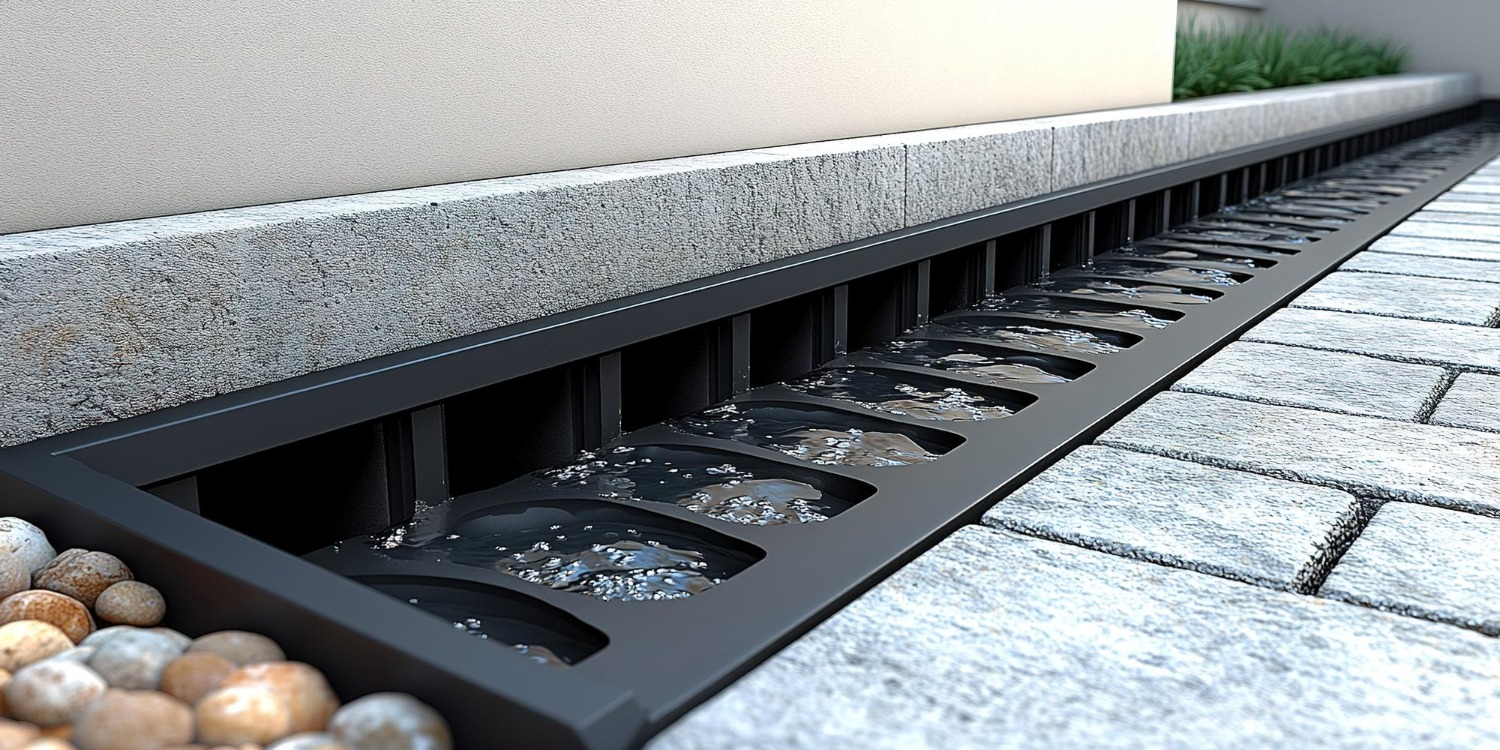
A catch basin is essentially a drain with a grate on top that collects surface water and directs it through an underground pipe to a more suitable discharge location. You’ve seen them in parking lots and at the bottom of driveways. The residential versions work on the same principle, just at a smaller scale.
Catch basins work best when combined with proper grading. The surrounding area should slope toward the basin at that 1.5% to 2% grade we talked about earlier. Without adequate slope, water will pool around the basin instead of flowing into it—which defeats the purpose entirely.
The Connection Between Yard Drainage and Your Foundation
Here’s something most people don’t think about until it’s too late: the water pooling in your yard today could be in your basement tomorrow.
Water that sits against your foundation creates hydrostatic pressure, the force of water pushing against the concrete. Over time, this pressure finds any weakness: hairline cracks, porous spots, the joint where the wall meets the footing, and exploits it. This is why we often see foundation waterproofing problems that started as simple yard drainage issues.
The most effective approach treats drainage and foundation protection as parts of the same system. Proper grading moves surface water away from the house. French drains or weeping tiles intercept groundwater before it reaches the foundation. Waterproofing membranes on the foundation wall provide a final barrier against any moisture that does make it through.
When these elements work together, water gets managed at every stage. When they’re treated as separate problems by separate contractors, you often end up with gaps in protection that only become apparent when your basement floods.
Stormwater Credits: Money Back for Better Drainage
Here’s something that might surprise you: improving your property’s drainage could actually save you money on your utility bills.
The City of Kitchener’s stormwater credit program and City of Waterloo’s stormwater management program both offer stormwater credit programs that can reduce your stormwater utility fees by up to 45%. The credits are available to homeowners who install measures that reduce runoff from their property, things like rain gardens, infiltration galleries, permeable pavers, and rain barrels or cisterns.
The City of Guelph’s rebate program takes a different approach, offering rebates of up to $2,000 for rainwater harvesting systems and rain gardens. It’s a one-time payment rather than an ongoing credit, but it can offset a significant portion of the installation cost.
Contact your municipality for current program details and eligibility requirements, as these programs can change. But it’s worth investigating before you start a drainage project. You might be able to incorporate elements that qualify for credits or rebates, effectively getting paid to solve your water problem.
DIY vs. Professional Drainage Work
Can you tackle yard drainage yourself? It depends on the scope of the problem.
Extending downspouts? Absolutely a DIY project. Adding a small rain garden in a low spot? Very doable with some research and weekend effort. Minor regrading of a flower bed that’s holding water? Most homeowners can handle that with a rake and some topsoil.
But French drains, comprehensive regrading, or anything that involves digging below the frost line? That’s where professional installation makes a real difference. Getting the slopes right, ensuring proper depth, selecting the right materials for our soil conditions, and connecting everything to an appropriate discharge point, these details determine whether your drainage system works for decades or fails within a few years.
There’s also the integration factor to consider. If your yard drainage connects to foundation drainage, or if retaining walls are part of the equation, you want someone who understands how all these systems interact. A French drain that works perfectly in isolation can actually make foundation problems worse if it’s not properly coordinated with the rest of your property’s water management.
Getting Started
If you’re dealing with water pooling in your yard, start with the basics. Walk your property during and after a rainstorm. Note where water collects, where it flows, and where it seems to come from. Check your downspouts and their discharge points. Look at the overall slope of your yard relative to your house.
Sometimes the solution is simple. Sometimes it requires a more comprehensive approach. Either way, understanding what’s actually happening with water on your property is the first step toward fixing it permanently—rather than just managing the symptoms.
Ready to discuss your property’s drainage needs? Contact Winstorm Projects for a free consultation.
———————————————————————————————————
Winstorm Projects serves Guelph, Kitchener, Waterloo, Cambridge, and surrounding areas with engineered retaining walls, drainage systems, and foundation waterproofing. We build outdoor structures that last.