
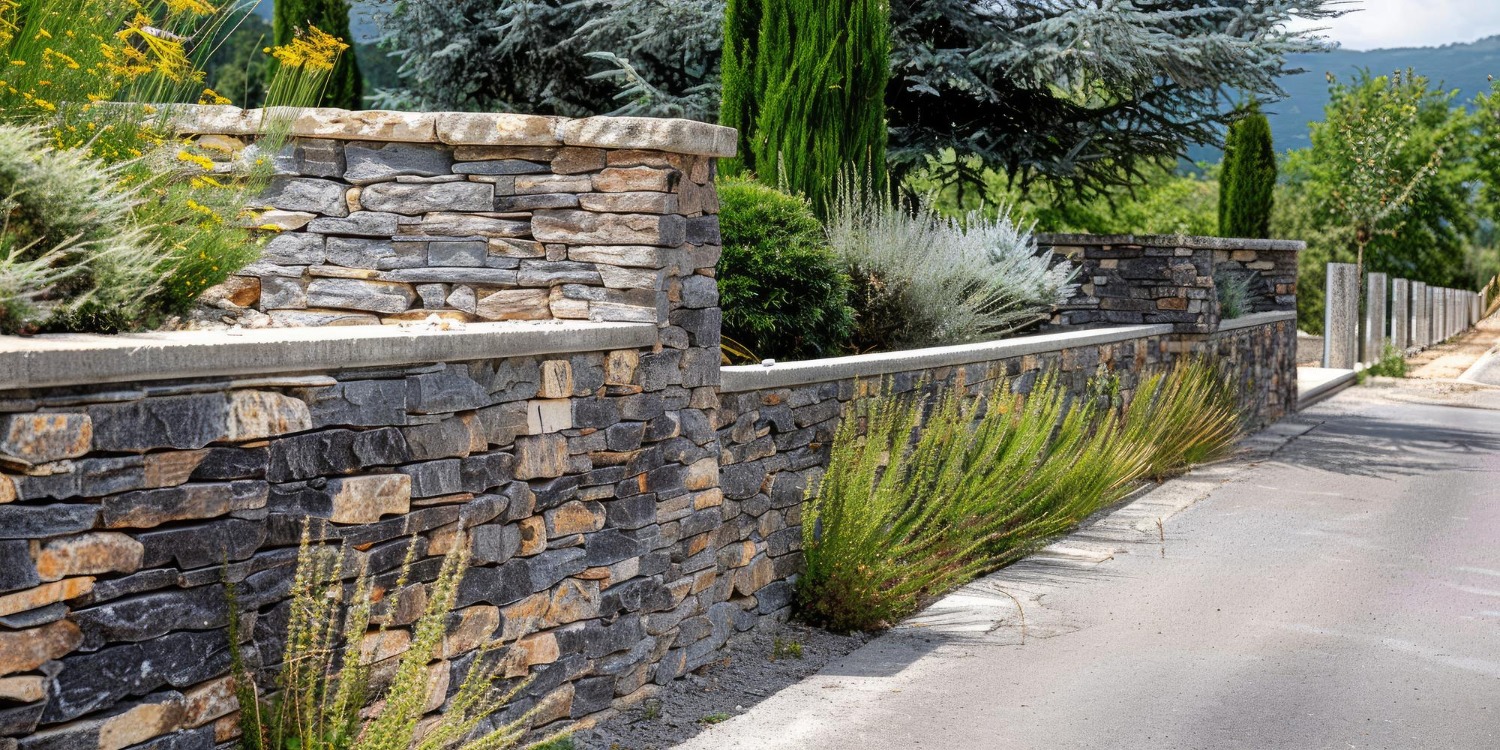
If you have got a sloped yard in Ontario, you have probably had that moment. You are standing on your property after a heavy rain, watching the soil migrate downhill, wondering how long before that grade becomes a real problem. Maybe your neighbour just had a retaining wall installed, and it looks great, or maybe you have seen enough erosion that you know something needs to be done.
Here is the thing most homeowners discover too late: not all slopes need the same solution, and getting it wrong can cost you twice. A wall that is too small fails. A wall that is engineered when it does not need to be wastes money. And a wall built without proper drainage? That is usually the most expensive mistake of all.
This guide walks through what you actually need to know about building retaining walls on sloped properties in Ontario, from permits and engineering requirements to materials and drainage. No fluff, just practical information based on the Ontario Building Code and what we have seen work in the Kitchener-Waterloo-Guelph area over the years.
Why Sloped Yards Need Special Attention in Ontario
Ontario is tough on outdoor structures. Between the freeze-thaw cycles, clay-heavy soils in much of the Waterloo Region, and seasonal rainfall patterns, a slope that looks stable in July can turn into an erosion nightmare by April.
The Waterloo Moraine, which covers roughly 400 square kilometres across our service area, creates some unique challenges. This massive glacial deposit supplies most of the region’s groundwater, but its complex mix of sand, gravel, and clay means water moves unpredictably through sloped properties. What looks like solid ground can have layers that channel water in unexpected directions, putting pressure on any structures in its path.
Water always flows downhill, obviously. But on a sloped yard, that flow concentrates and accelerates. Without proper management, you end up with erosion at the top, saturation in the middle, and flooding at the bottom. A retaining wall can address all three, but only if it is designed with drainage as the priority, not an afterthought.
When Does Ontario Require Engineering?
This is where most homeowners get confused, and honestly, the rules are not as straightforward as they should be.
Under the Ontario Building Code, specifically Clause 1.1.2.2, retaining walls exceeding one metre in exposed height are classified as “designated structures” under certain conditions. What does that mean in practice? If your wall is taller than about three feet three inches and meets specific criteria, you may need a building permit and potentially professional engineering review.
The City of Kitchener, for example, requires building permits for retaining walls greater than three feet three inches in height. Other municipalities in the region have similar thresholds, though the application process varies.
Now, here is where it gets interesting. Even if your wall technically falls under the permit threshold, engineering might still be the smart choice. Walls on steep slopes, walls holding back saturated soil, or walls near existing structures can fail catastrophically without proper design, regardless of height. A wall that topples onto a patio or into a neighbour’s yard creates problems that far exceed the cost of getting it designed right the first time.
For properties near waterways or steep slopes in the Grand River watershed, the Grand River Conservation Authority may also need to approve your project. Their standard processing time runs four to six weeks, so factor that into your planning if you are near a watercourse or ravine.
One Tall Wall or Multiple Terraces?
This decision trips up a lot of homeowners. You have got a significant grade change, maybe six or eight feet over the length of your yard. Do you build one tall wall and be done with it, or break it into smaller terraces?
The answer depends on more than aesthetics. From an engineering standpoint, terraced walls can actually be more stable than a single tall structure, but only if they are spaced properly. The National Concrete Masonry Association (now the Concrete Masonry and Hardscapes Association) recommends terraced walls be spaced at least twice the height of the lower wall apart. So if your lower terrace is three feet tall, the next wall should be at least six feet back from it.
Why does spacing matter? When terraces are too close together, they function as a single wall and need to be engineered as one structure. The whole point of terracing is to distribute the load across multiple independent walls. Get the spacing wrong and you have paid for two walls that still need the engineering of one tall wall.
Terraces also create usable space, which is something a single tall wall cannot do. Those flat areas between walls can become planting beds, seating areas, or just visual breaks that make a steep slope look intentional rather than problematic.
Understanding Terracing Methods
There are three basic approaches to terracing a slope, and each has trade-offs.
Cut terracing involves excavating into the hillside to create flat areas. You build walls at the high end of each level and remove soil to create usable space below. This works well when you want to maximize the upper portion of your property or when drainage naturally flows away from structures.
Fill terracing takes the opposite approach. You build walls at the bottom of the slope and backfill behind them to create level areas. This is often the right choice when you need more usable space at the lower end of your yard.
Cut and fill combines both methods. You excavate from the upper areas and use that material to build up the lower sections. In my experience, this is often the most economical approach because you are reusing material already on site rather than trucking soil in or hauling it away.
The method you choose affects everything from drainage design to final costs. Cut terraces naturally shed water downhill, while fill terraces need more attention to compaction and drainage to prevent settling.
Choosing Materials for Sloped Installations
Material selection for sloped yards is not just about looks. Different materials handle the stresses of sloped installations differently, and what works on flat ground may not be the best choice for a challenging grade.
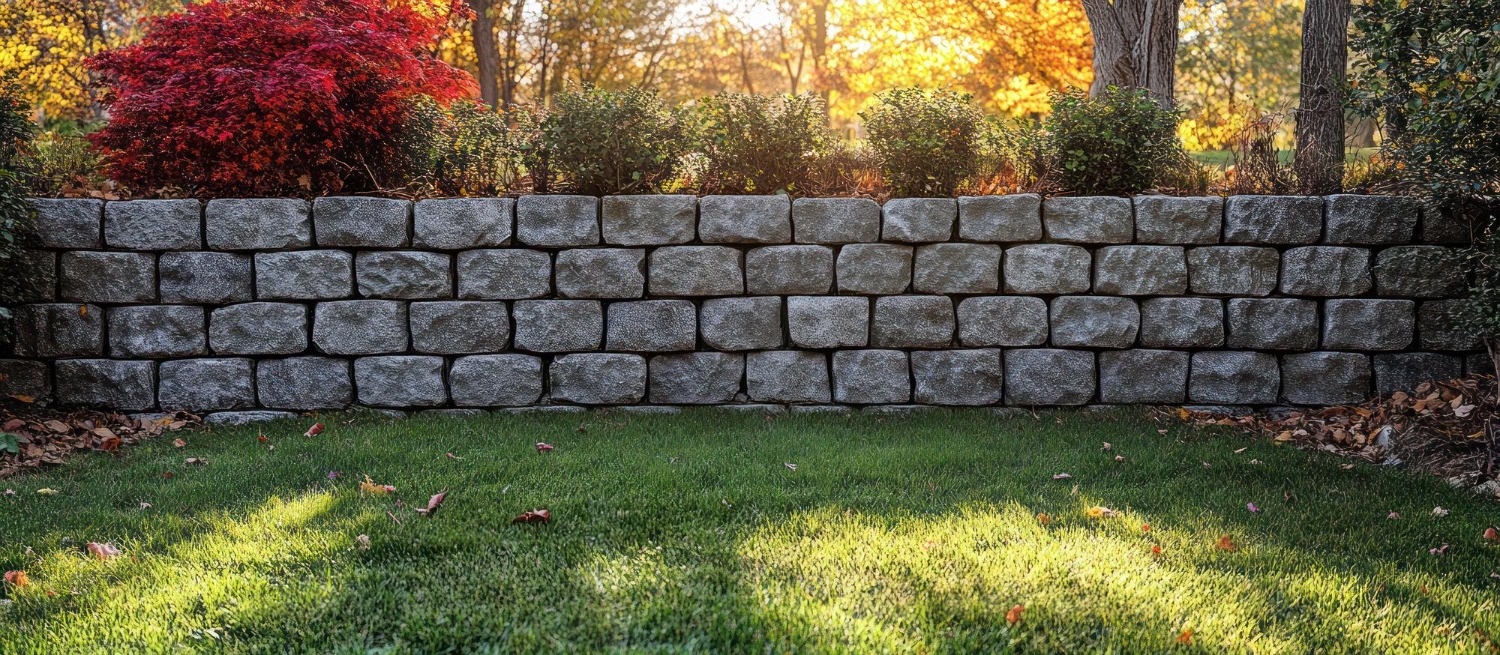
Engineered concrete block systems like Grande Wall Stone offer predictable performance and, importantly, come with full engineering drawings for specific applications. This matters when you are dealing with slopes because you are not guessing whether the wall design can handle the loads involved. The manufacturer has already calculated it. For Ontario installations, look for blocks that meet freeze-thaw durability testing requirements. Not all concrete products handle our climate equally, and cheaper blocks from uncertain sources can deteriorate within a few years.
Armour stone handles steep grades exceptionally well. These large natural stones, often weighing several tonnes each, create bold structures with serious holding power. The weight and mass of armour stone works in your favour on slopes, providing stability that smaller materials cannot match. The trade-off is that installation requires heavy equipment and experienced operators, which affects both cost and site access requirements.
Pressure-treated wood remains a viable option for lower walls, typically under a metre in height. It costs less than stone alternatives and blends naturally with outdoor surroundings. However, wood has a finite lifespan, generally 15 to 25 years before replacement becomes necessary. In direct soil contact, especially in wet conditions, deterioration happens faster than many homeowners expect. For slope applications, wood works best in non-critical situations where eventual replacement is acceptable.
Drainage: The Real Key to Long-Term Success
Here is what most people miss about retaining walls on slopes: the wall itself is only half the solution. Drainage is what determines whether that wall lasts five years or fifty.
Water builds up behind retaining walls, creating hydrostatic pressure that pushes against the structure. On flat ground, this pressure is manageable. On slopes, where water naturally concentrates and flows, it can be severe enough to move walls that are otherwise well built. Industry research shows that when water accumulates behind a wall, the factor of safety against failure can drop by more than a third.
Proper drainage for a sloped retaining wall includes several components: a drainage aggregate behind the wall face, a perforated pipe at the base to collect and redirect water, and outlets that move water safely away from the structure. For terraced systems, each wall needs its own drainage, and the whole system needs to work together to move water downhill without overwhelming any single component.
In the Waterloo Region, where clay-heavy soils can hold water like a sponge, this drainage design is especially critical. A wall that works perfectly in sandy soil may fail in clay because the water has nowhere to go. This is where understanding local soil conditions, not just general engineering principles, makes the difference between a wall that performs and one that disappoints.
What Professional Installation Actually Involves
The visible part of a retaining wall, the stones or blocks you will look at every day, represents a fraction of the work involved in a properly built structure. Understanding what goes on below grade helps explain why professional installation costs what it does.
Excavation comes first. For sloped installations, this often means working with heavy equipment on challenging terrain to create a stable base. The base needs to extend below the frost line, which in Southern Ontario means at least 1.2 metres deep, to prevent frost heave from shifting the wall over time.
Base preparation involves compacted granular material, typically six inches or more, that provides a stable foundation and aids drainage. On slopes, getting this layer level and properly compacted is more difficult than on flat ground, and cutting corners here shows up as wall movement within a few seasons.
For walls requiring additional reinforcement, geogrid, a synthetic mesh material, extends from the wall face back into the retained soil. Industry standards call for geogrid to extend at least 60 percent of the wall height back into the soil, and proper installation requires careful attention to compaction at each layer.
Then comes the drainage system, backfill, compaction, and finally the visible wall construction. Each step builds on the previous one, and skipping or rushing any stage compromises the entire structure.
Making the Right Decision for Your Property
Every sloped yard presents unique challenges, and there is no one-size-fits-all solution. The right approach depends on your grade, soil conditions, drainage patterns, how you want to use the space, and what you are willing to invest.
Start by understanding what you are dealing with. How steep is the slope? Where does water go during heavy rain? Are there existing structures, trees, or property lines that limit your options? These questions shape what is possible and what makes sense.
For significant grade changes, especially those requiring walls over a metre in height or multiple terraces, professional assessment is worth the investment. A contractor experienced with slopes can identify drainage issues, engineering requirements, and construction challenges that are not obvious from the surface. They can also help you understand the trade-offs between different approaches before you commit to a direction.
At Winstorm Projects, we approach sloped yards differently than most contractors. We see the slope, the drainage, and potential waterproofing concerns as connected problems that deserve connected solutions. A retaining wall that does not address where the water goes is only solving half the problem. Our projects include up to five-year warranties with annual check-ins because we want to see how walls perform through multiple seasons, not just hand over the keys and disappear.
If you are dealing with a sloped yard in Kitchener, Waterloo, Guelph, Cambridge, or surrounding areas, we would be happy to take a look and discuss your options. No pressure, just an honest assessment of what your property needs and what it will take to get there.
Sources
1. Ontario Building Code, Clause 1.1.2.2 – Designated Structures (via IN Engineering Ltd.)
2.City of Kitchener Building Permits
3.Grand River Conservation Authority – Development Permits
4. Concrete Masonry & Hardscapes Association – SRW Best Practices Guide (2024 Revised Edition)
5. Region of Waterloo –Waterloo Moraine Groundwater Resources